


Worth reading. Worth tasting. Worth considering.
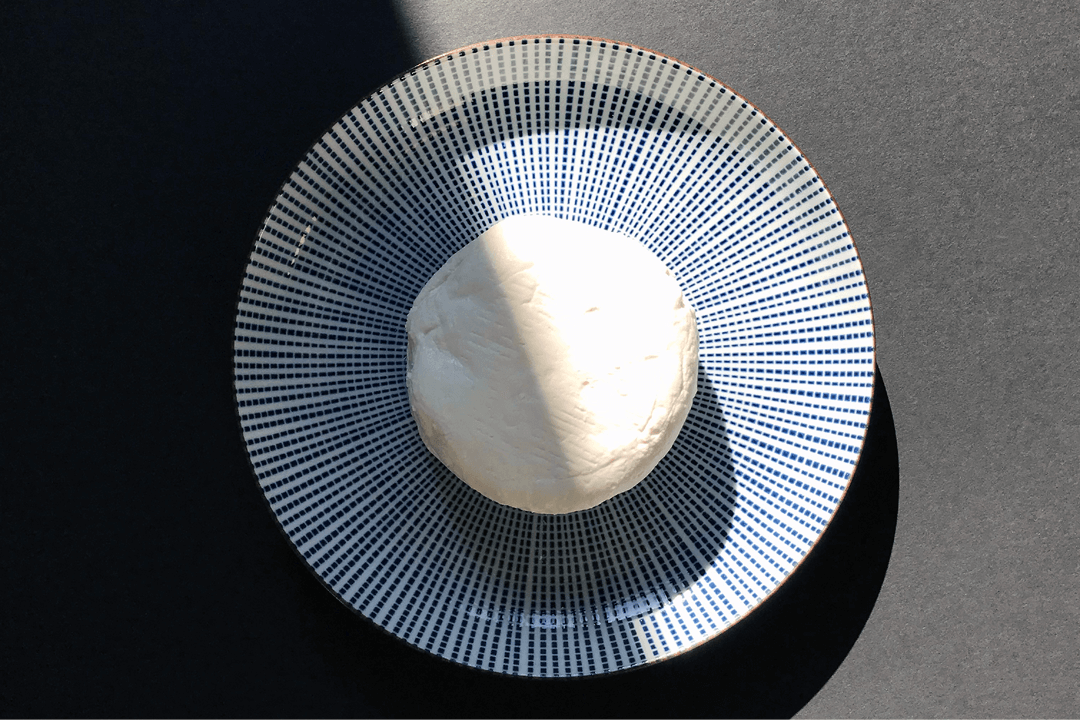
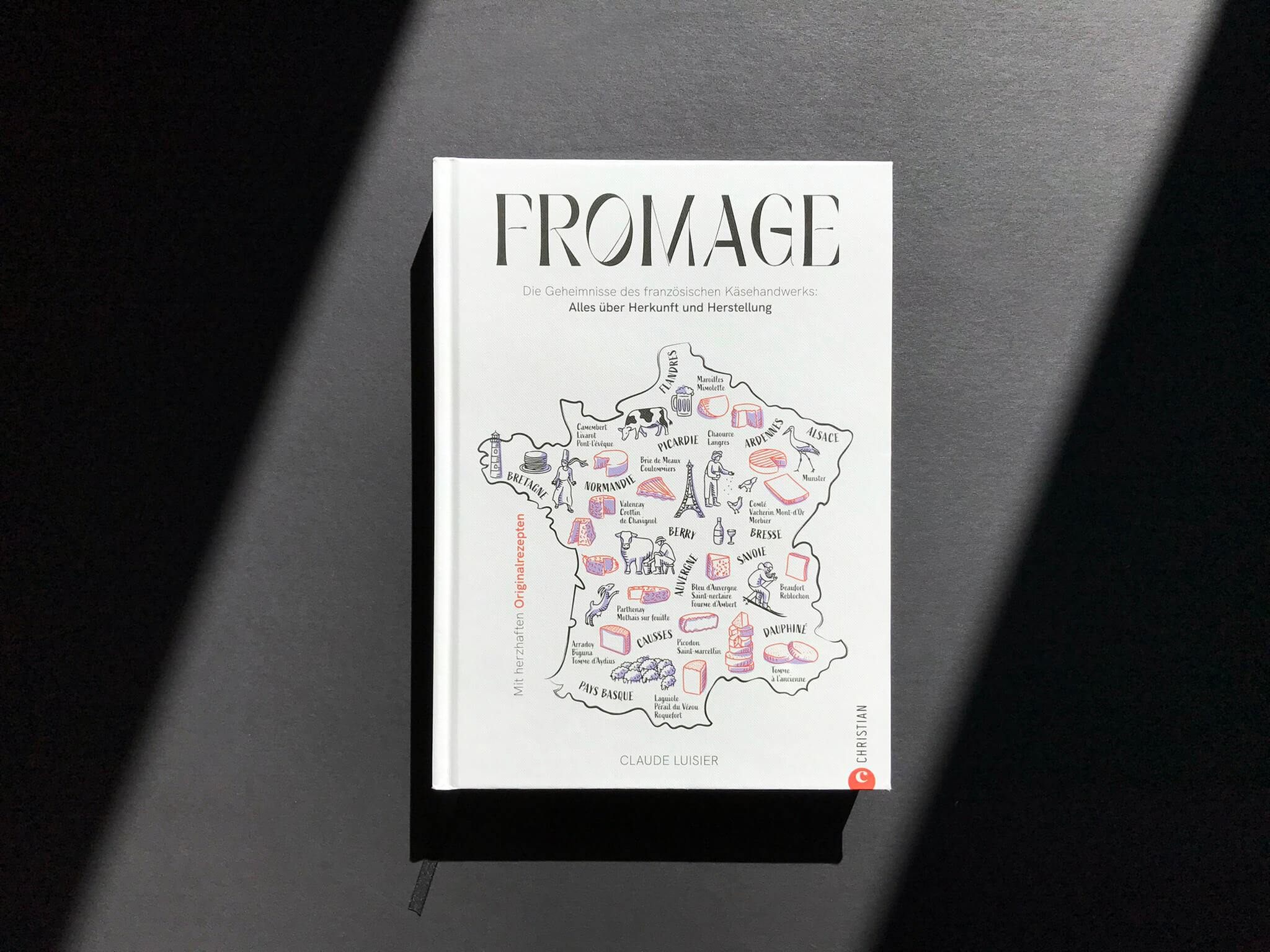
The book Fromage whets the appetite for natural cheese. The author, cheese affineur Claude Luisier, uses the term to describe cheese that is produced directly on the farm, as opposed to cheese that comes from the factory.
Rare raw milk cheese
As you have probably noticed while reading GloriousMe: We love cheese, very much cheese made from raw milk. We are loyal to our cheesemongers at the market and in the store and love discovering regional cheeses when we travel.
We thought we were part of a large cheese community. A series of figures in the book Fromage, which is well worth reading, made us realize that the raw milk cheese we love so much is now a rarity:
In 1945, 100 percent of cheese in France was made from raw milk.
In 2016, only 10 percent of all cheese was produced from raw milk and only 3 percent of this came from production directly on the farm.
According to the author Claude Luisier, more recent figures could not be found. As an experienced French affineur, Claude Luisier has been observing the market for decades and, according to his assessment, the proportion of raw milk cheeses has become even smaller.
A cultural asset
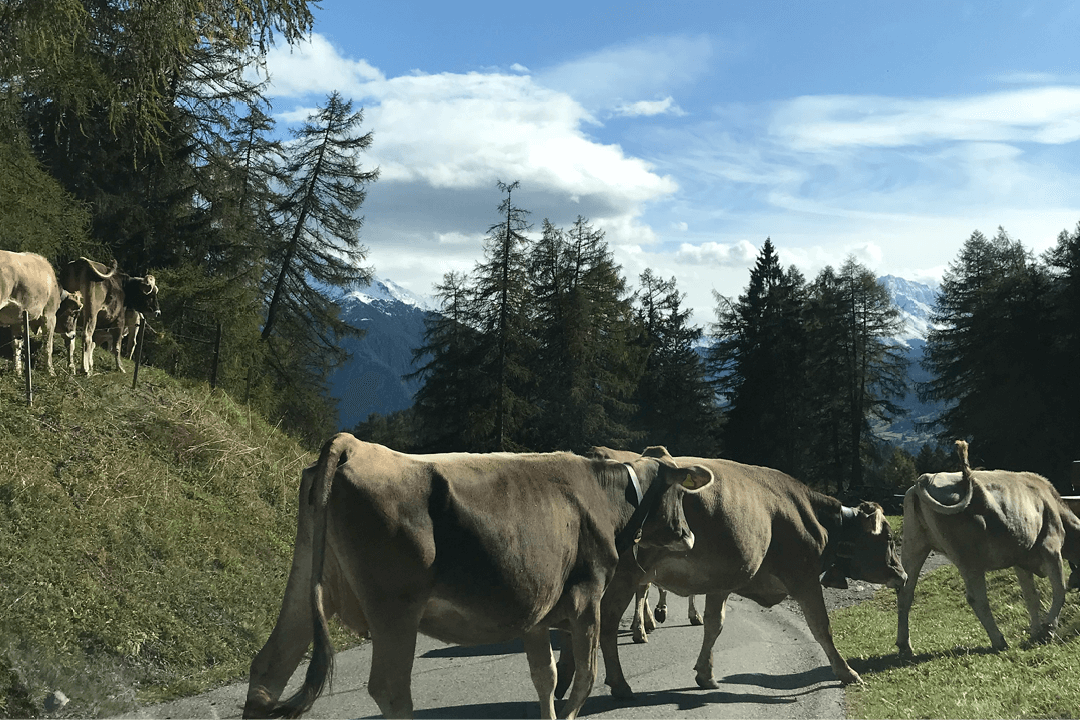
The artisanal production of cheese was and still is a necessity rather than a luxury. On mountain pastures or in remote valleys, fresh milk had to be processed quickly. Cheese was an obvious choice, especially as hard cheese has a very long shelf life.
In the valley, on the other hand, where the dairy’s milk truck arrives daily, the low milk prices are an incentive for farmers to convert their milk into cheese and thus move up the value chain. Milk processed into cheese has a higher margin, but the costs of production, documentation, a farm store or even an online store should not be underestimated.
The production of cheese, from fermentation to maturing, is an age-old tradition. The first descriptions of the Swiss cheese Sbrinz date back to the Middle Ages and experts believe that Sbrinz became the world-famous Parmesan in Italy, with slight modifications to the production process.
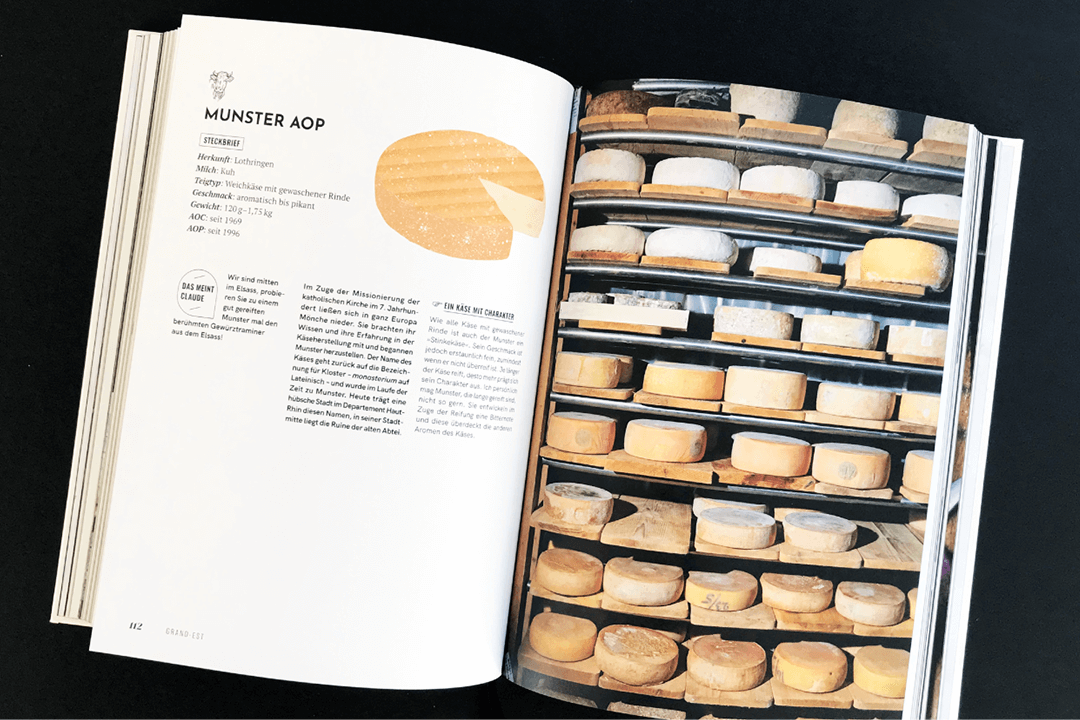
This is the strength of the Fromage book: each type of cheese is accompanied by a description of its origin and the production process and often an interesting story about the history of the respective type of cheese. So we learned a lot of new things even about our favorite cheeses.
Concentration
The author wisely limits himself to the best-known cheeses in France and also mentions some Swiss cheeses, particularly from Valais. Even if you already know most of these cheeses, you will find interesting facts, stories and many excellently photographed recipes that use cheese and sound very sensible. As an affineur, Claude Luisier knows many restaurants and their chefs seem to be well disposed towards him.
The affineur’s love is for the production of raw milk cheese on the mountain pasture or farm. This is understandable, as the aromas of this production method are incomparable. You can taste the herbs and seasons. The basis of many raw milk cheeses is hay milk.
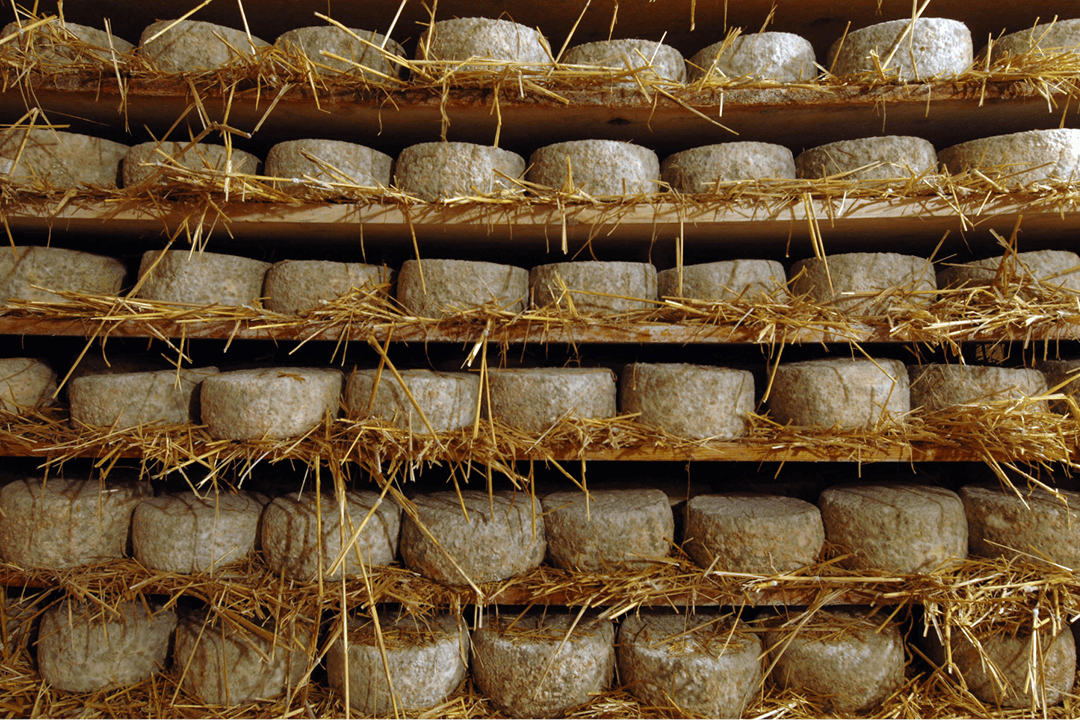 Pecorino Roncione aged to perfection © Alamy Stock Photo
Industrially produced cheese tastes stale in comparison and tries to compensate for the lack of natural flavors with high amounts of salt and other additives such as synthetic truffle flavors. Which is more or less successful.
Many types of cheese are available from both farm production and industrial production. It is worth asking in each case, as terms such as “artisanal cheese (fromagee artisinal)” or “terroir cheese (fromage de terroir)” are purely marketing terms.
If a cheese is made from raw milk, it does not come from a factory where only pasteurized milk is processed.
However, this is not a plea to eat only raw milk cheese. There are also excellent cheeses that are not made from raw milk. Many are made from raw milk or pasteurized milk. It is worth asking and testing how, for example, Bleu de Auvergne made from raw milk tastes compared to Bleu de Auvergne made from pasteurized milk.
Sources of pleasure
Where can you get really good cheese? Residents of large cities have a clear advantage in terms of choice, as most larger cities have good cheesemongers, dedicated delicatessens and markets offering good quality cheeses.
In Berlin, the Cheese Berlin trade fair takes place every November at Markthalle Neun in Kreuzberg, where you can meet producers, affineurs and cheese philosophers in conversation or at lectures.
It’s no wonder that the Pick And Cheese business idea, which originated in England, has also established itself in the German capital. A nice variation on the sushi conveyer belt. Here, small plates of cheese roll in, each cheese comes with an exciting accompaniment.
The cheeses come from Brandenburg, Saxony, Baden-Württemberg or the Allgäu and are combined with apple compote, chilli paste or fudge, for example. A great idea.
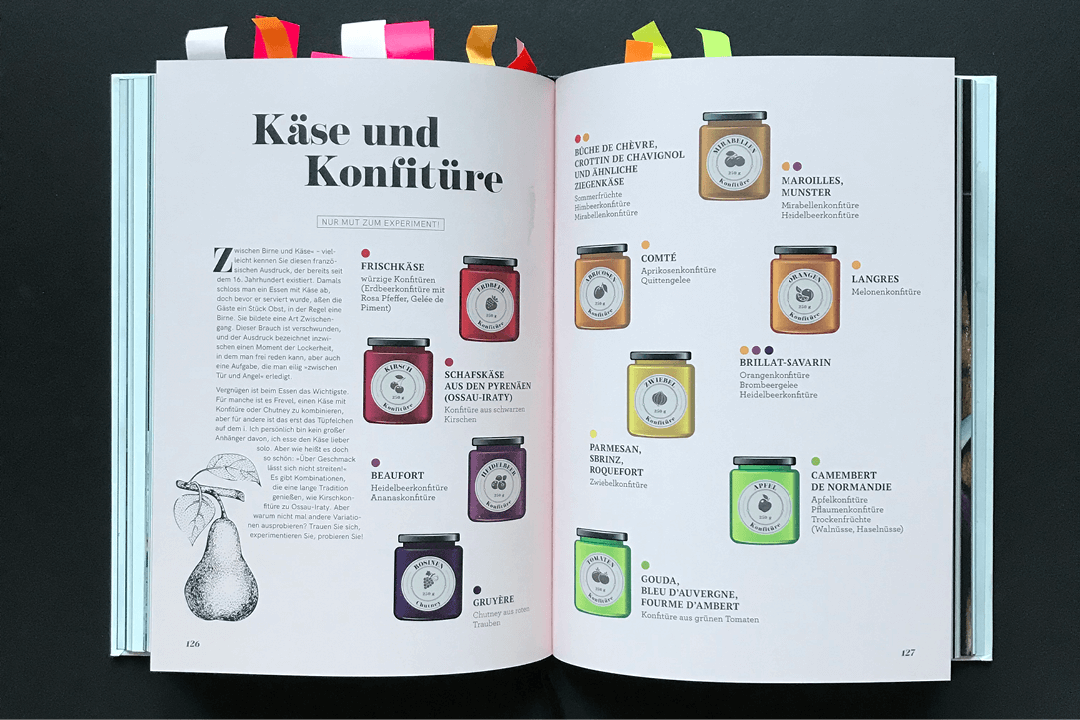
At home or when traveling

Loyalty to the local cheesemonger pays off. It also pays to ask questions and be curious in order to give cheeses that are not so common a chance.
The best discoveries of interesting cheeses can be made while traveling. You can buy a Swiss Gruyère in shops in this country. Grey cheese is usually only available locally, ideally when you are hiking and stopping off at a mountain hut.
Parmesan Reggiano, Gorgonzola, Mozarella and Burrata are available almost everywhere. However, if you want to enjoy many other types of Italian cheese, you should go to Italy, perhaps even to the raw milk cheese fair that takes place every two years in the small Piedmontese town of Bra. There will be another opportunity for this in 2027.
If you would like to get to know local cheese producers, you could join cheese journalist Ursula Heinzelmann, who offers small group tours to cheese producers in Switzerland and around Lyon.
Subjective
The taste of cheese is always subjective. When it comes to cheese, our particular love belongs to the many excellent cheeses produced in England and Ireland. Before Brexit, it was still possible to order excellent cheese from Paxton & Whitfield in London online, but unfortunately this is no longer possible.
Only an extended stay in the British Isles can help. Instead of the usual travel guides, you could put The Cheese Mongers History of British Isles by New Palmer in your luggage. The latter tells the story of the cheese farms in the context of English history.
A lovely gift for all cheese lovers
The book Fromage is a lovely gift for anyone who loves cheese. It is beautifully illustrated and contains good photos and interesting facts. Or did you know that the goat rolls you eat are only genuine Sainte-Maure if they have a straw along their entire length bearing the name of the producer?
Or that Valençay, the delicious soft goat’s cheese from the Loire Valley, looks like a truncated pyramid because Napoleon Bonaparte stopped off at the famous Talleyrand’s castle in Valença after his unsuccessful Egyptian campaign. There, the top of the pyramid of cheese was cut off. Some say it was the angry Napoleon himself, others suspect that the diplomatic Talleyrand had it done in the kitchen so as not to remind Napoleon of his defeat.
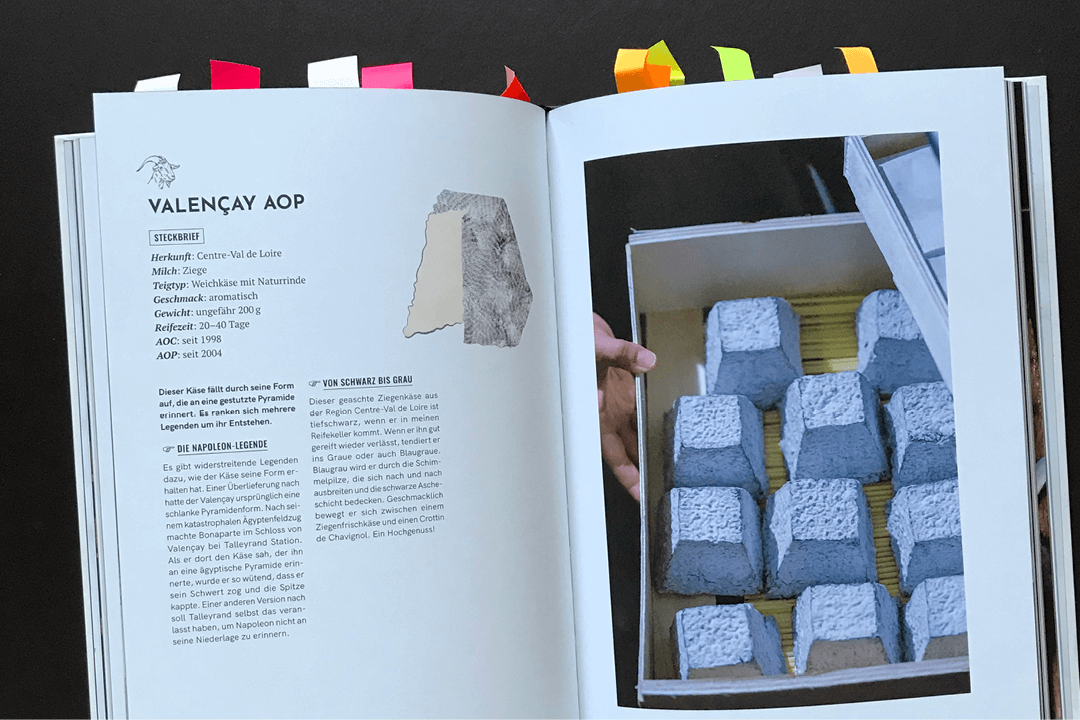
After reading the book, it suddenly becomes clear why your favorite cheese often tastes so different: the raw milk makes all the difference.
#Advertising #ProductPlacement #IndependentRecommendation #BecauseWeLoveIt
Cover photography © GloriousMe 2026
