


Culture before and after the war
If it weren’t for the magnificent temples of Angkor Wat, the world would probably have forgotten Cambodia, a country that has been badly damaged by war. But when you think of Cambodia, you think not only of killing fields but also of culture.
Angkor Wat
In the 10th century, a wise Khmer king had reservoirs built around an imposing fortress in which rice was cultivated. This water management system meant that rice could be harvested several times a year.
This also contributed to the increasing wealth of the Khmer and made it possible to build extensive temple complexes. Today, they are among the most important tourist magnets in Asia.
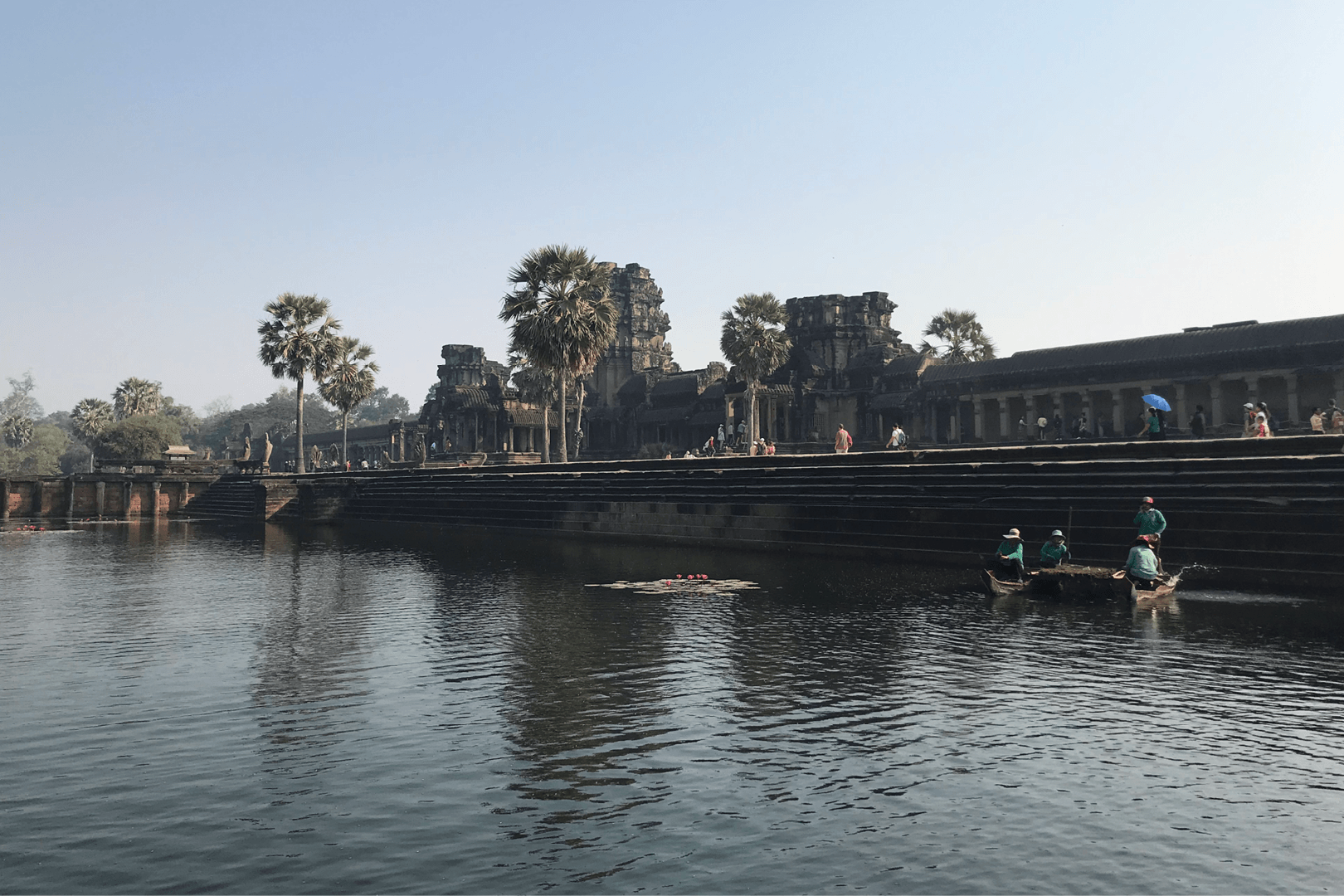 Angkor Wat, view from the Rainbow Bridge © GloriousMe
From a flourishing kingdom to a bloody dictatorship
In between lies a bloody period in which Cambodia was targeted by various neighbors and geopolitical superpowers. During the Vietnam War, Cambodia was also bombed along the border with Vietnam. Even then without the approval of the US Congress.
As if all these war activities were not enough, a horrific civil war broke out in the country, in which the Khmer Rouge attempted to establish an idealized socialist state in which only the Khmer Rouge propaganda-trained agricultural worker had a right to exist.
Other population groups were cruelly executed on the so-called Killing Fields, of which there were around 300 in the country. In their brutality, the Khmer Rouge managed to execute even more people than Mao or Stalin did in their countries.
Everything we know from Ukraine, from the former Holodomor to agricultural fields that are currently being planted with landmines by Russian troops, existed in Cambodia.
A tourist magnet
In 2025, over a million people visited the temples of Angkor Wat. GloriousMe was there too. The extensive temple complexes are impressive.
The sunrise in front of the most famous temple view can only be experienced in a large crowd of tourists. However, the number of other tourists is only noticeable when the sun illuminates the area and you realize that you are not completely alone.
You can still be alone in the rest of the temple complex and in the temple grounds, which are still overgrown by the jungle and largely in ruins.
It is worth visiting the area with a knowledgeable guide to learn more about the history of the temple complexes and to explore lonely, unrestored parts of the temple that look like lost places.
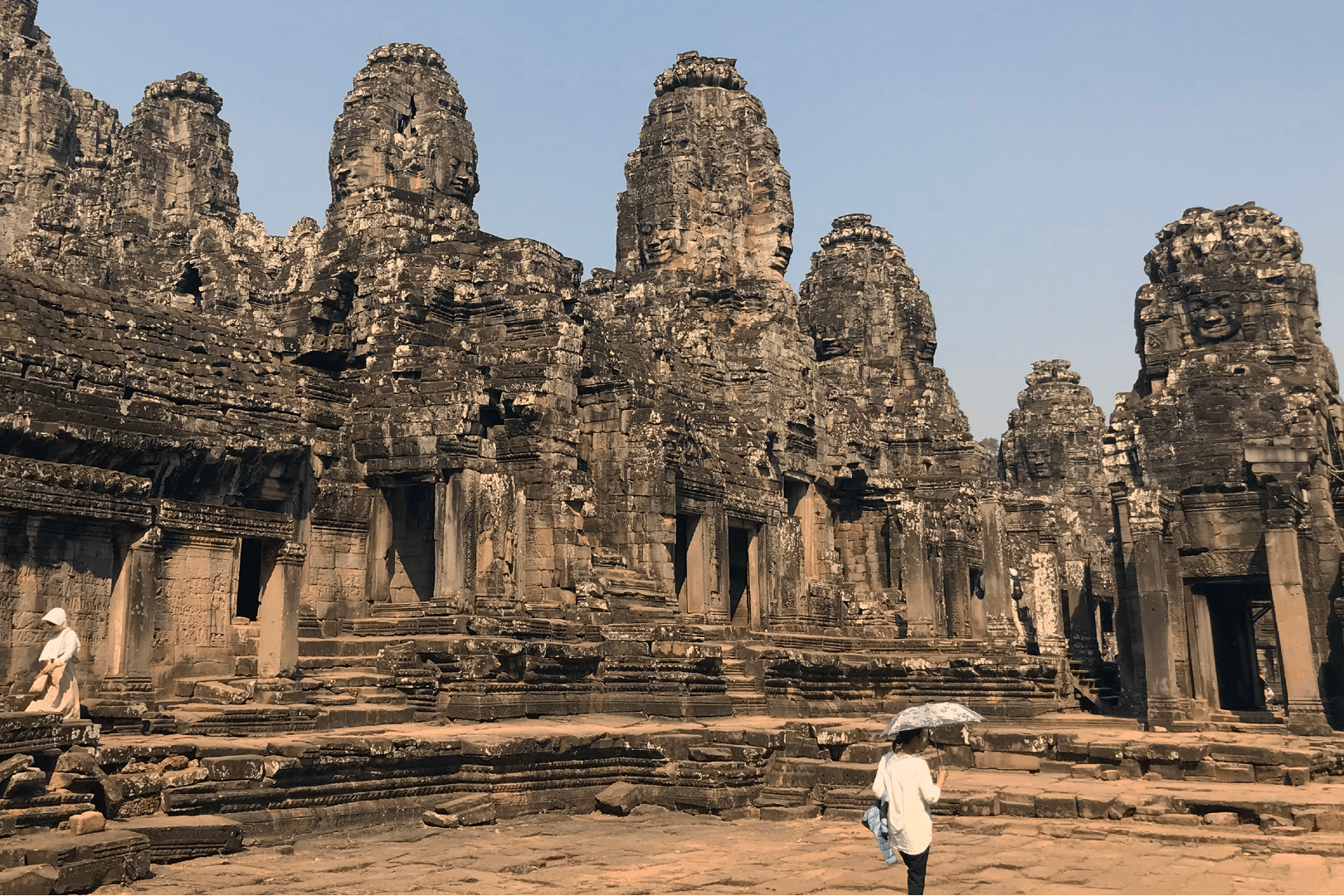 The Prasat Bayon temple complex in Angkor © GloriousMe
For many visitors, a quick look at the main part of the temple complex is enough before heading back to the nearby town of Siem Reap. There you will find a globally standardized pub culture as well as beautiful old districts with interesting galleries and restaurants. Those who prefer the latter will feel at home in the former Foreign Correspondents Club, which is now used as a hotel.
Culture helps to see more than everyday life
The outstanding restoration of Angkor Wat would not have been possible for the poor country of Cambodia alone. As a result of the long, bloody civil war, there were no trained craftsmen, restorers and art historians left. They were either dead or had left the country.
When Cambodia slowly reopened after the end of the civil war at the end of the 1980s, the privately organized World Monuments Fund saw a unique opportunity and, at the request of the Cambodian government at the time, began planning the restoration work on the Angkor Wat temple complex with the Royal University of Fine Arts in Phnom Penh.
After the temple site had been cleared of landmines, an extensive training program began: Cambodian craftsmen, restorers and students were trained and today’s Angkor Archaelogical Park was founded.
The World Monuments Fund financed and managed the restoration and training work for over thirty years until the Angkor Archaelogical Park was handed over to the Cambodian national authority in 2024.
For many Cambodians, working on the restoration of these temples not only means a much-needed income, but also a connection to the ancient Khmer culture.
Khmer Cuisine
The world’s luxury hotel chains, be it Aman, Raffles or Park Hyatt, are now all represented in Siam Reap to make their guests’ visit to the temples as pleasant as possible.
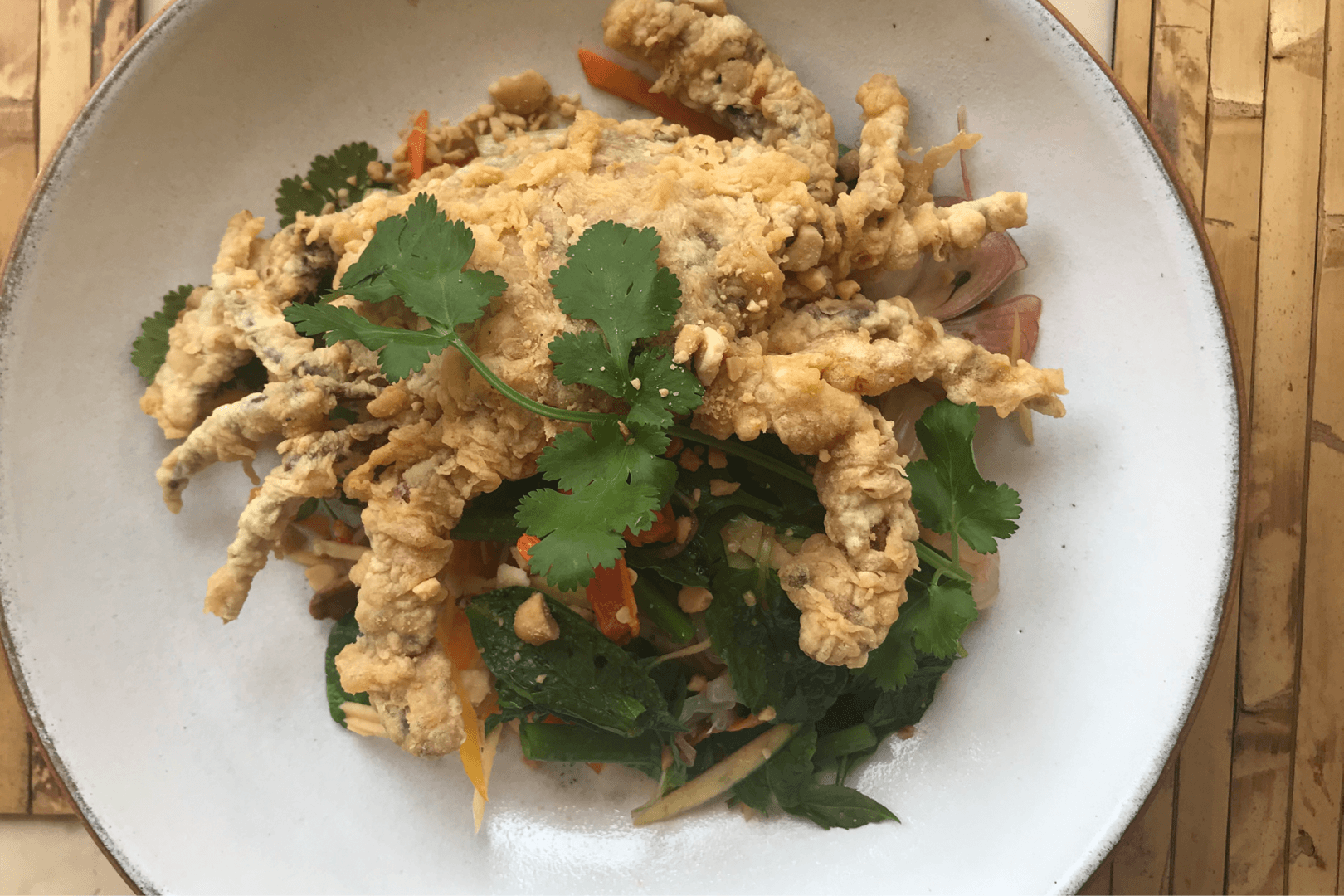
Khmer cuisine cooking courses are often offered in the hotels. The knowledgeable traveler who has learned about the Khmer Rouge in history lessons or possibly seen the famous film Killing Fields about the bloody Khmer Rouge regime will be taken aback at first.
But the hotel’s Experience Manager immediately informs him with a smile that this is not meagre revolutionary food, but delicious dishes reminiscent of Cambodia’s centuries-old culture.
While in the past tourists often only came to Siem Reap for a day visit, visited Angkor Wat and then moved on, today some also visit the capital Phnom Penh and/or one of the coastal resorts such as the Six Sense Krabey Island on the Cambodian side of the Gulf of Thailand.
Tourism is an important source of income for the poor country of Cambodia.
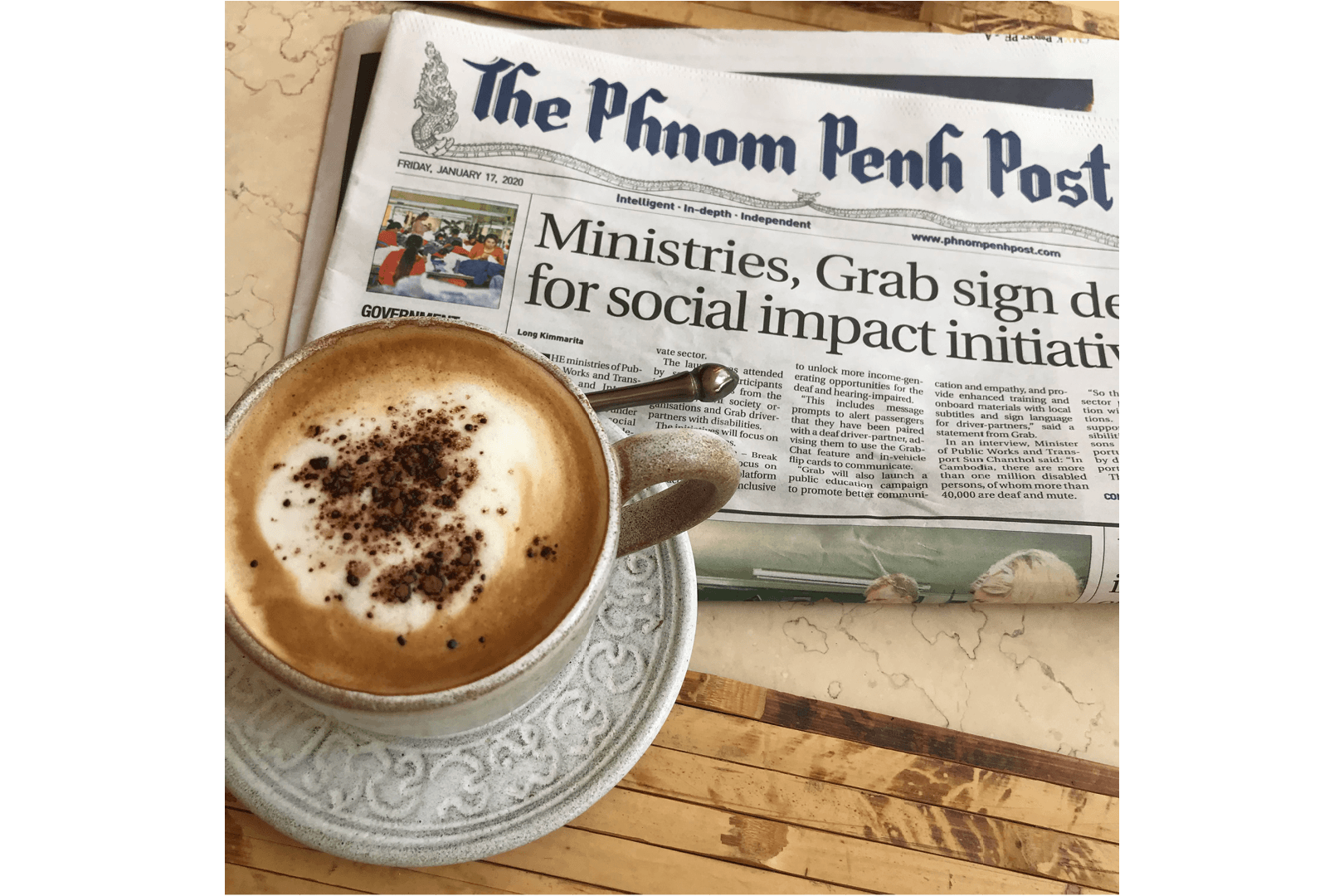
If you know the famous Raffles Hotel from Singapore, you can also enjoy a Raffles Hotel in the capital Phnom Pen. There, we recommend a visit to the stylish and gently modernized Elephant Bar. Jackie Kennedy was admittedly there before GloriousMe, in 1967.
The neighbors
Its neighbor Vietnam was not always peaceful and friendly. China has also been putting out feelers for a long time and now has great influence in Cambodia.
But there are also delicate cultural plants that weave the thread of a great cultural past into the present.

The golden silk
Everyone who travels through Asia is fascinated by the silk fabrics there. In Cambodia, there is Mulberry Silk, silk fabric whose threads are spun by silkworms that feed on the leaves of mulberry trees and whose cocoons appear golden in color.
This small, exclusive form of silk production flourished under the former Khmer dynasty and has survived on a small scale in Cambodia.
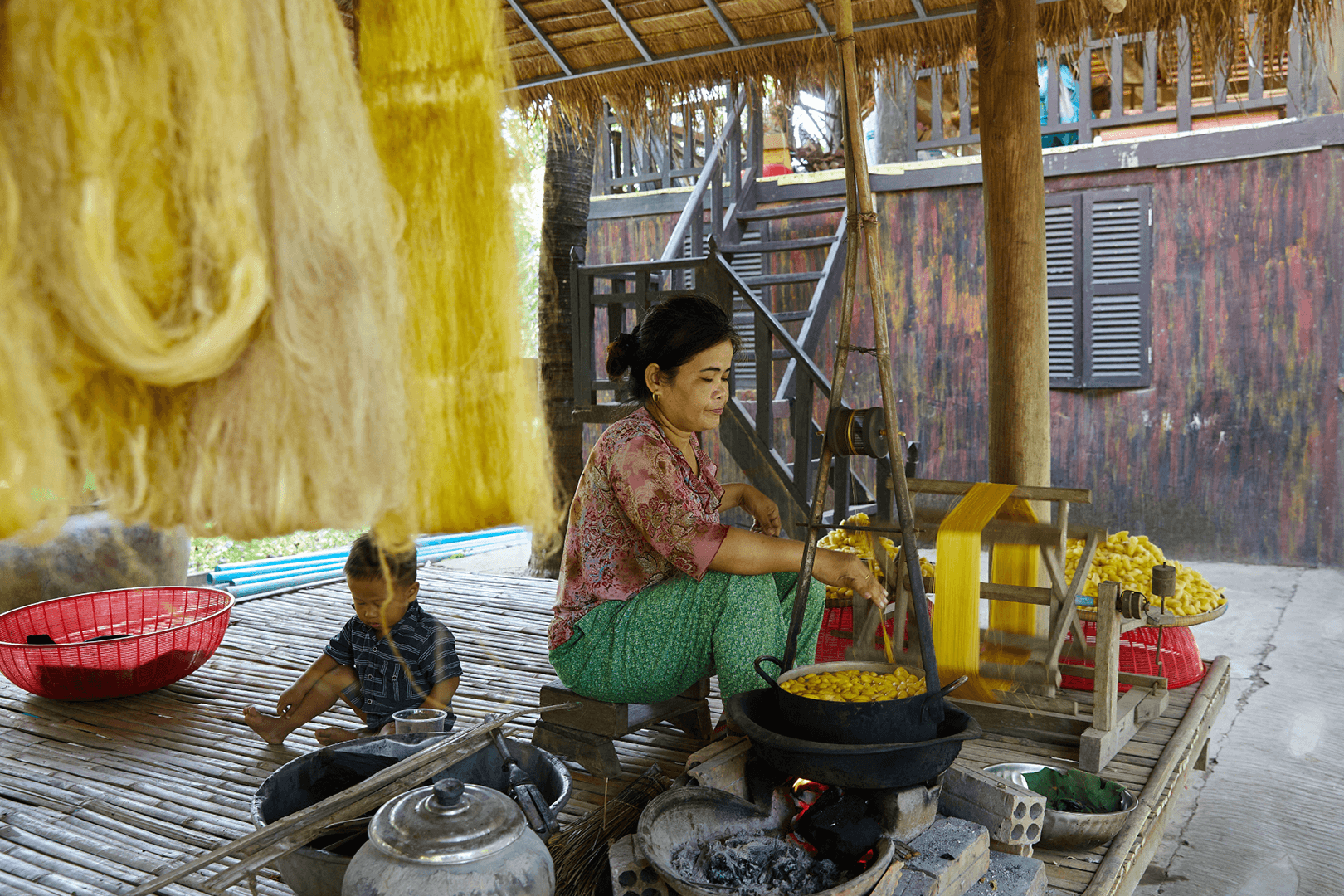 Traditional silk spinning mill, Cambodia © Alamy Stock Photo
It is not easy to acquire these original Cambodian Mulberry Silk silk fabrics, as 95 percent of the silk fabrics currently available in Cambodia come from Vietnam.
This is where knowledgeable insiders or the hotel boutiques of luxury hotels, trained by Hermes and Chanel, help to offer their clients the very best in silk.
World Monuments Funds
And so we are back to the word Monuments Funds at the end of this article. With flight prices to Asia rising daily due to the war in Iran, it will probably be some time before you plan a trip to Cambodia. Then you can close your eyes with a Mulberry Silk sleep mask and dream of your next long-distance trip.
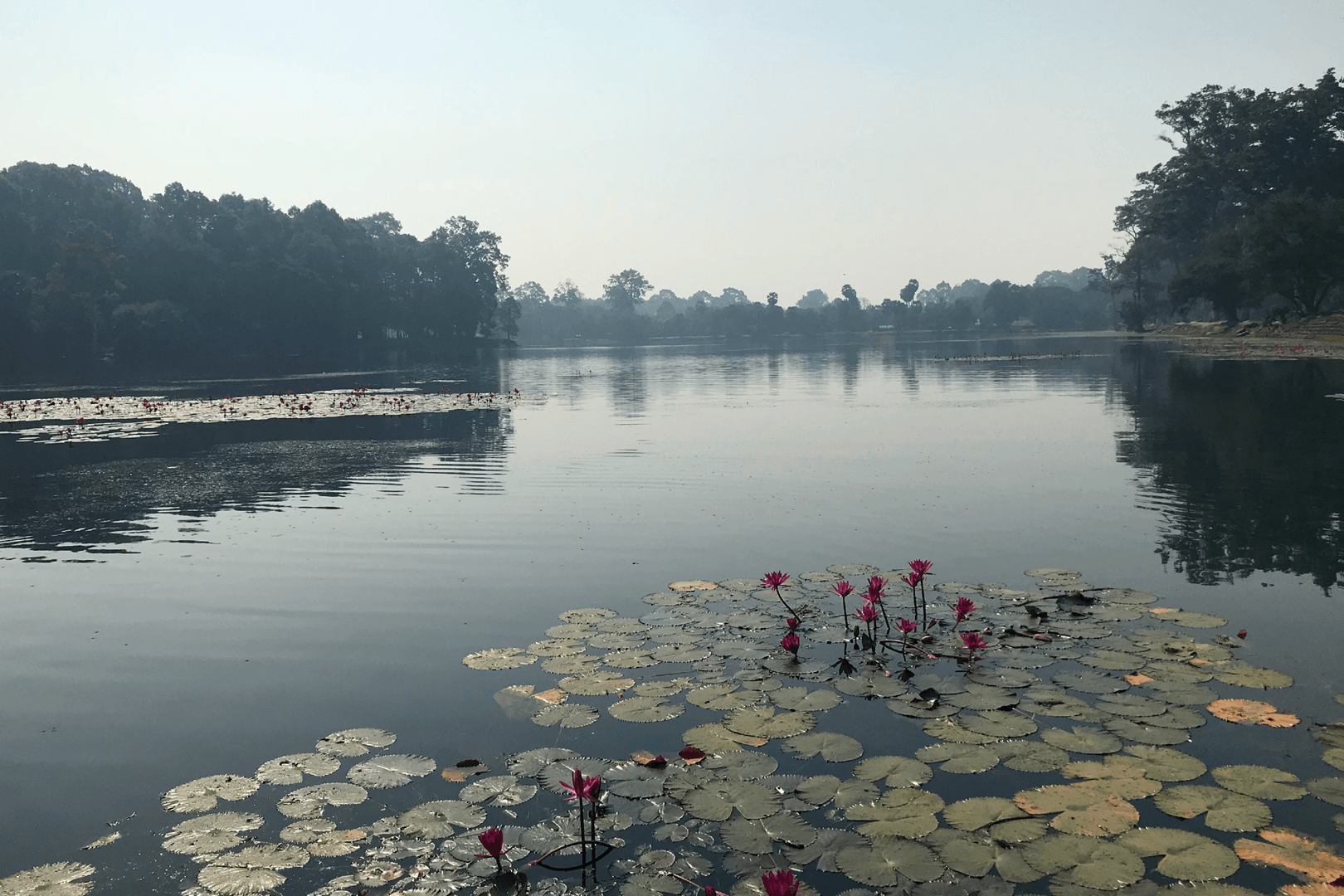 Angkor Wat, view from the Rainbow Bridge © GloriousMe
There is also time to take a look at the interesting World Monuments Fund organization. Founded in 1965 by James A. Gray, an American electrical engineer who was stationed in Italy for some time during his time in the army. Fascinated by Italian monuments and concerned about their deterioration, he developed a proposal on how to save the Leaning Tower of Pisa. His advice was not accepted.
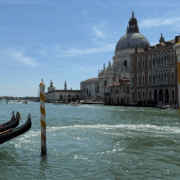
In Venice, people were more open to his practical expertise and the World Monuments Fund began restoring important cultural monuments in the lagoon city, initially as a one-man operation.
Monument foundation with global aspirations
Decades later, it has grown into an established organization that is highly successful in acquiring private sponsors and restoring priceless art monuments such as synagogues, churches, temples, palaces, etc. worldwide.
In addition to private patrons, the American state was a financial backer. Presumably sensing that this money would no longer flow, the company began to cooperate with fashion and museum giants such as the Metropolitan Museum of Art (NY).
And when your Instagram feed recently showed Diana von Fuerstenberg chatting with photographer Juergen Teller in a palazzo in Venice, it’s a result of this organization recognizing the signs of the times and the importance of combining fashion and culture and successfully using it to save what can ultimately save us all as a culture.
#Advertising #ProductPlacement #IndependentRecommendation #BecauseWeLoveIt
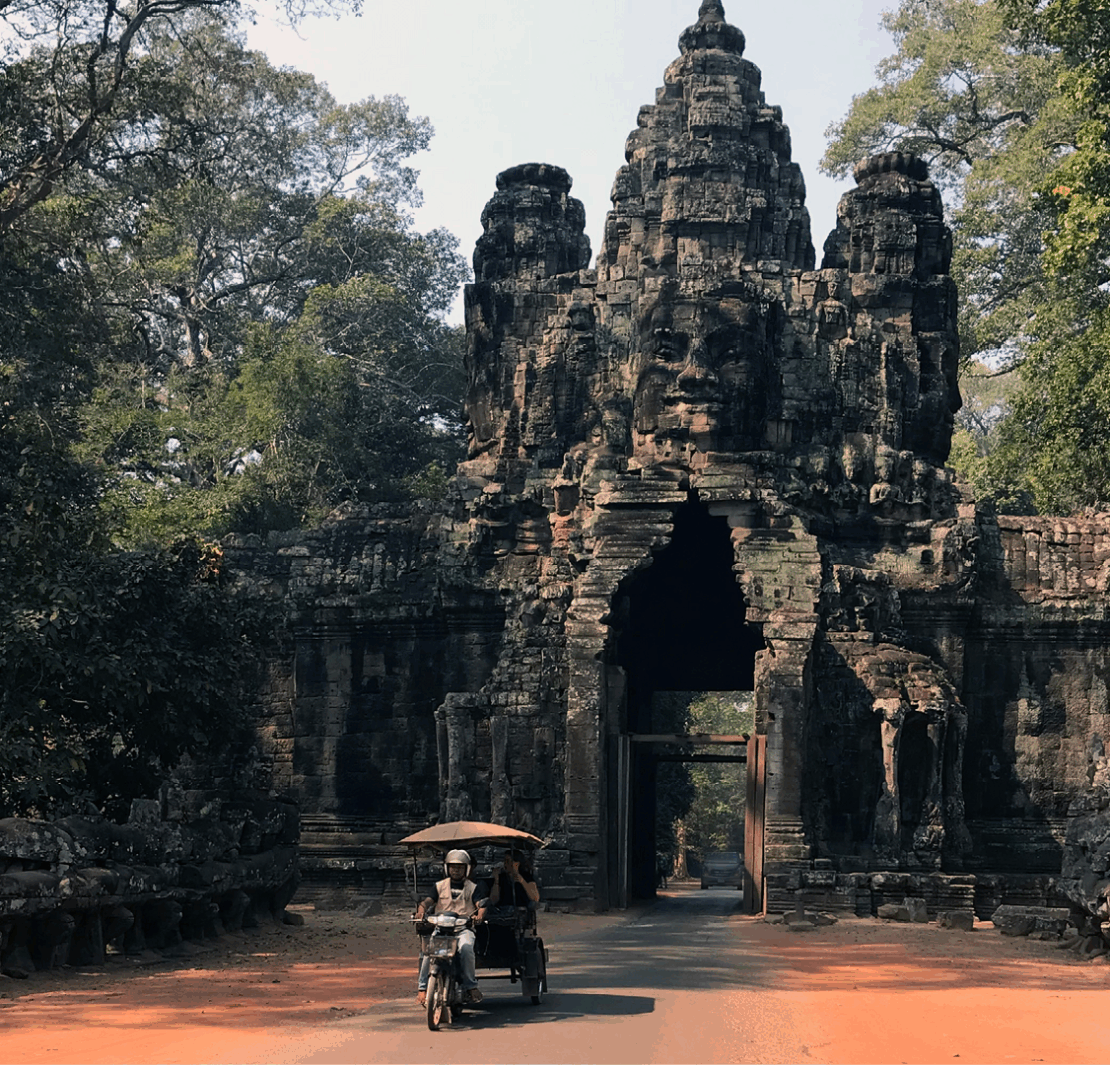
Cover photo: The Victory Gate in Angkor © GloriousMe
