

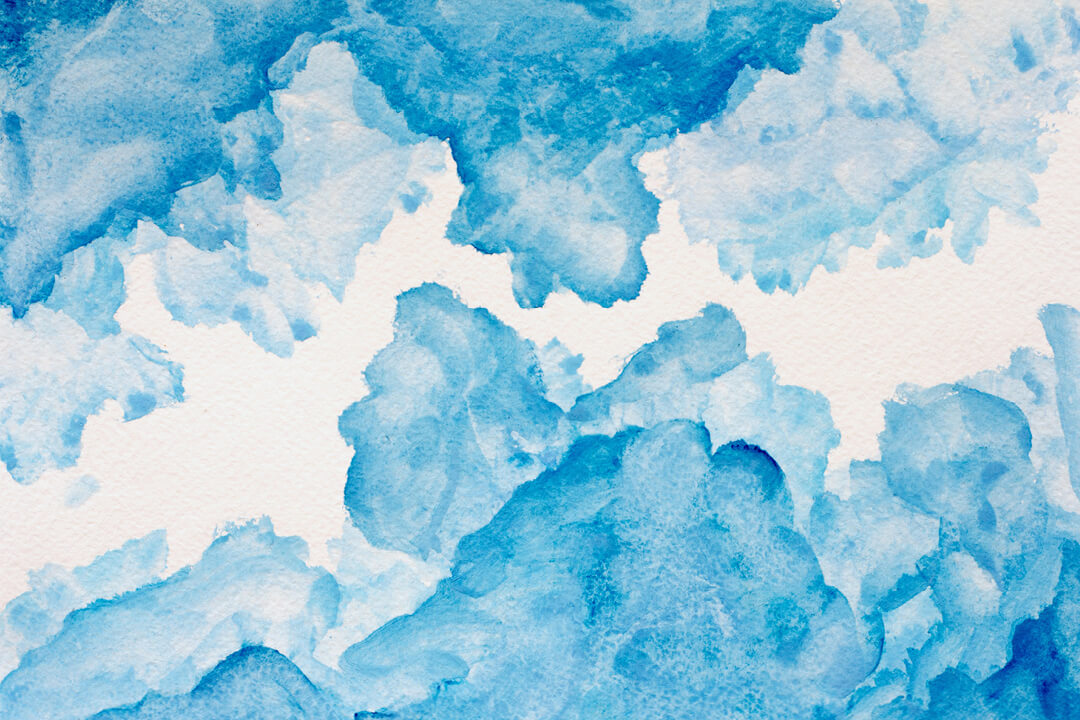

Cover photo © Alamy
A wonderful gift for people of all ages
That brand-new box of watercolors was the highlight of our back-to-school goodie bag back then
A Fresh Start with Watercolors
We all remember the box of watercolors from our school days. Getting started is incredibly simple: paints, paper, brushes, and two glasses of water—one to rinse the brushes and one to have fresh water on hand.
I’m guessing that, like you, that old box from your school days was probably tossed out long ago during one of your many moves.
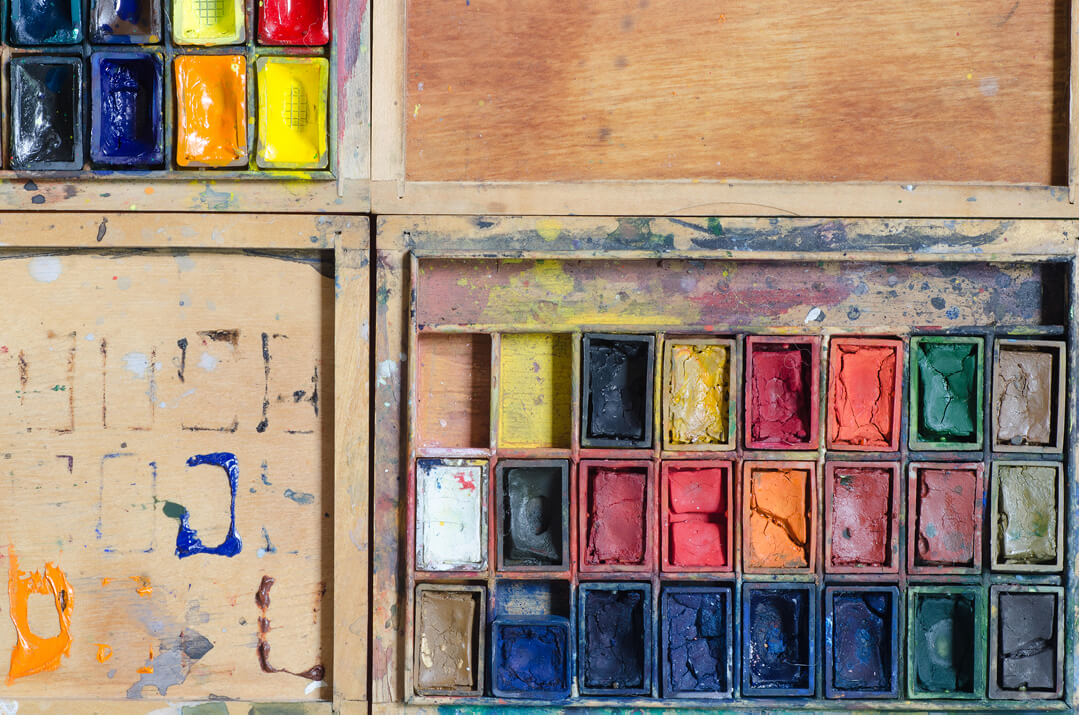 Agata Gladykowska / Alamy Stock Photo
Treat yourself or your close friends to a new watercolor set and start painting without any specific subject matter in mind.
Just for the fun of it
Experimenting creatively with paint and water is fun. Unlike many other creative activities, getting started is incredibly easy, and the investment is relatively small. A standard watercolor set for first-graders, some paintbrushes, and a good sketchpad are all you need to get started.
If you find that painting with watercolors offers you a welcome break from your efficiency-driven daily routine and the ever-present keyboard, taking it to the next level is a lot of fun: watercolors from Japan.
Japanese Watercolors
Watercolors from Japan generally have a higher pigment content. More pigments create a more interesting color effect and make it easier to work on larger areas of color.
You can, but you don’t have to, travel to the Japanese city of Nara—a center for the production of Japanese watercolors—or visit one of the specialty stores in Tokyo or Kyoto.
The small Belgian online retailer Nomado (Cool Goods For Global Nomads) carries Japanese watercolors in its product lineup.

Viewed Through Watercolors
King Charles III also began painting with watercolors during his school years at Gordonstoun School in Scotland. At first, he painted the natural landscapes around Gordonstoun; later, he captured his family’s castles and palaces on paper using watercolors.
Many photos show King Charles III painting with watercolors while traveling: in a garden in Kyoto, hiking in the mountains of Bhutan, or in Klosters, Switzerland, near Davos, where he has been spending his ski vacations for over forty years.
With the approval of the then-Crown Prince, the local ski lift operator used one of his watercolors—a landscape view of Klosters—as the design for the region’s ski lift pass.
King Charles III describes himself as an enthusiastic amateur for whom drawing is a source of joy and relaxation.
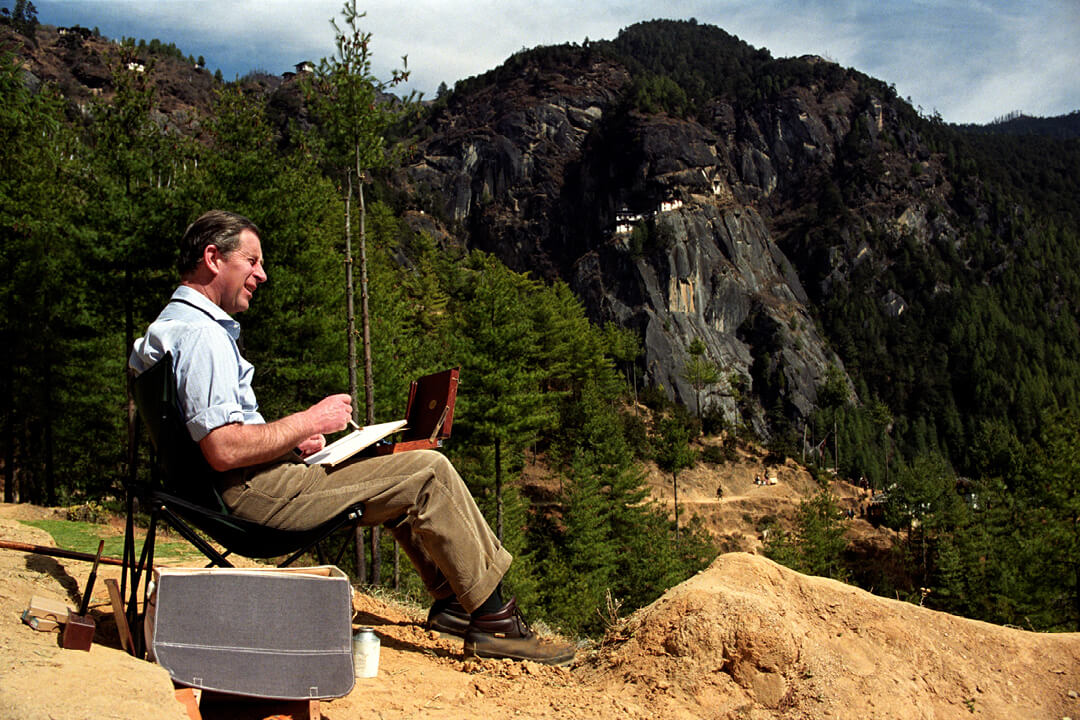 King Charles III in the Himalayas, Paro, Bhutan, 1998 © John Stillwell/PA/Alamy Stock Photo
“The Son Messes Up in Oil”
as Johann Nestroy wrote in *Der Zerrissene*. That is not the case for Queen Elizabeth II’s son. According to the *Daily Telegraph*, the scenes he captured in watercolors generated revenue of two million British pounds between 1997 and 2016 alone. This is well documented, as the proceeds went to the Prince’s Charitable Trust.
Almost all established artists have created works in watercolor. David Hockney, who enjoys painting on a tablet, depicted himself in 2003 in a portrait featuring red suspenders—one of his most famous portraits.
Well-established contemporary painters such as Georg Baselitz, Markus Lüpertz, Norbert Bisky, and Andy Warhol have all worked with watercolors as well
Among the items in Karl Lagerfeld’s private estate, which was auctioned at Sotheby’s, were several watercolors, one of which depicts the Königstein Castle ruins in the Taunus Mountains.
See Instead of Clicking
Drawing while traveling offers a different perspective. A series of digital photos can be taken in a matter of seconds. And then it’s on to the next stop.
A watercolor drawing, on the other hand, requires you to look at the subject for much longer and with greater attention to detail. Seeing becomes an experience.
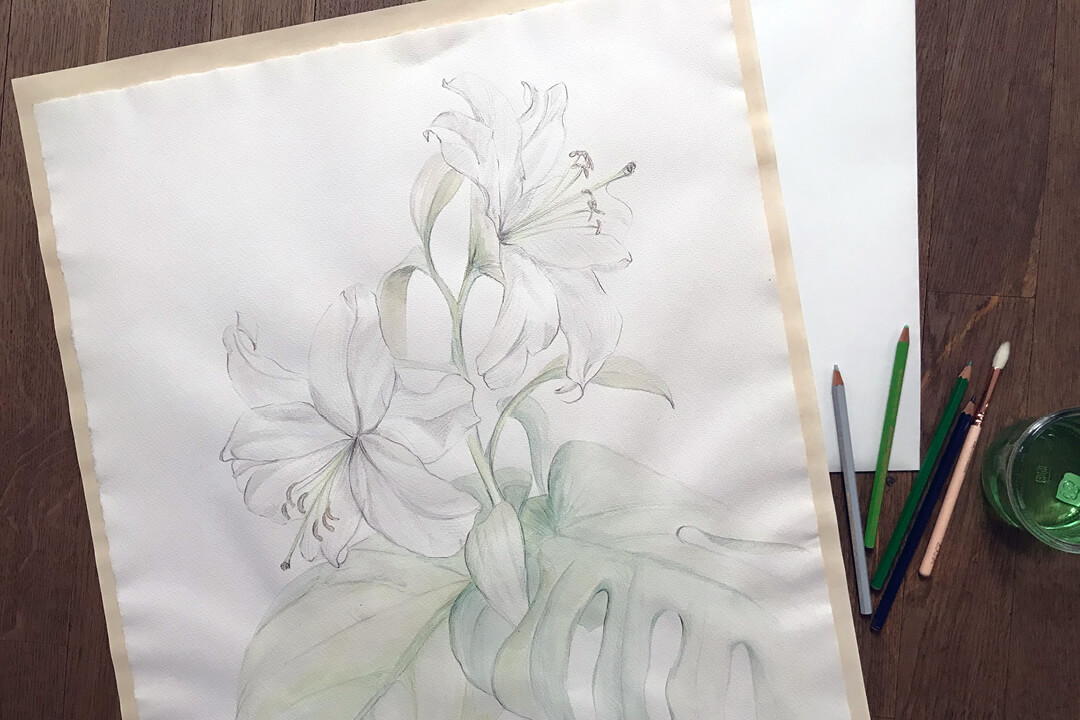

Just like a visit to a museum, spending 30 minutes looking at a single painting can leave a much deeper impression than looking at 30 paintings in one minute.
Winston Churchill turned to watercolor pencils after he was demoted during his military service. He became an enthusiastic amateur painter and, whenever things got tough, he would happily take some time off and travel to paint.
A World Tour in Watercolors
The British foundation Watercolour World Project digitizes watercolors from museums and private collections and makes them available for viewing free of charge in a database.
One focus is on watercolor paintings from before 1900—that is, before the invention of photography. The database is a visual delight and offers a fascinating window into outstanding works that are otherwise stored away from light in museum archives or private collections and are rarely, if ever, on view.
Access to watercolors from around the world is free. One click takes you to other worlds: a visual treasure trove and a real treat for all art lovers.
The Special Invitation
An invitation featuring a hand-drawn design by you would be something truly special.
You can find blank paper cards from various retailers, or you can ask someone who has a paper cutter to cut your favorite paper to size for you.
It doesn’t have to be perfect or realistic. An abstract design in your favorite colors says everything about your style.
#Advertisement #ProductPlacement #IndependentRecommendation #BecauseWeLoveIt
Cover image: Blue Watercolor © Norbert-Zsolt Suto / Alamy Stock Photo
